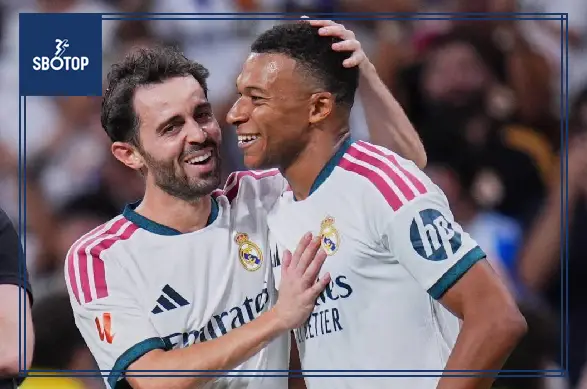
Bernardo Silva is rapidly shedding the image of merely being a backup player for Real Madrid. The recent win against Elche highlighted a recurring issue for Los Blancos whenever they lose grip on a match. Despite starting strong and leading 2-0 in the first half, their performance took a sharp downward turn. Elche seized control of possession and managed to score twice, pressuring Real Madrid until Carlos Espi finally netted the clinching goal that secured three points for the team. This situation reflects a critical need for the squad to have a midfielder capable of maintaining possession and controlling the game’s tempo.
When Real Madrid Struggles to Maintain Control
A similar predicament had surfaced earlier when Real Madrid faced Real Betis. In instances where ball possession slipped away, managing the match posed significant challenges, forcing them to defend against opponent pressure until the very end. This is where Bernardo Silva presents a valuable solution. Although he may not be a traditional playmaker like Rodri or Toni Kroos, his exceptional ball retention skills can be incredibly beneficial. The Portuguese star displays the ability to receive the ball in tight spaces, turning quickly, and distributing effectively to his teammates. His work ethic shines through, particularly when Real Madrid is under pressure and in dire need of a ball-winner.
Alongside him, Kylian Mbappe continues to claim his stake as a contender for the world’s best player, while Vinicius Junior’s productivity remains a subject of scrutiny.
The Increasing Importance of Silva
Both Aurelien Tchouameni and Federico Valverde boast diverse talents that add depth to Real Madrid’s midfield. However, when they are deployed as the more defensive midfielders, the team often finds it difficult to maintain possession under pressure. Silva’s presence could provide a crucial balance, aiding the squad in transitioning out of tight situations with his ball control and accurate passing. This would prevent the team from being overly reliant on quick counterattacks, allowing for a more balanced approach.
It’s important to acknowledge that due to his age, Silva cannot feature in every match. Thus, managing his playing time effectively throughout the season becomes paramount, ensuring he remains energized and available for critical fixtures.
Moreover, while he might not replicate the influence of Kroos in dictating tempo, he shares similarities with Luka Modric, particularly in ball retention and finding space to facilitate play. Real Madrid might not regain the ease afforded by Kroos when managing the rhythm of the game. However, Silva can contribute to retaining possession longer and alleviating pressure on the defense.
This places an emphasis on recognizing the importance of Silva’s role within the team structure. The need for players like him becomes increasingly evident, not only for immediate match control but also when considering long-term recruitment of midfielders with a similar profile.
In summary, despite not reaching the levels of Kroos or Modric, Silva fills a vital gap in Real Madrid’s midfield. Observing how he performs under pressure and integrates with both defensive and attacking play will be crucial as the season unfolds. The team must contemplate both the short-term impact he can have and the long-term strategy for maintaining a robust midfield backbone.
ALSO READ :