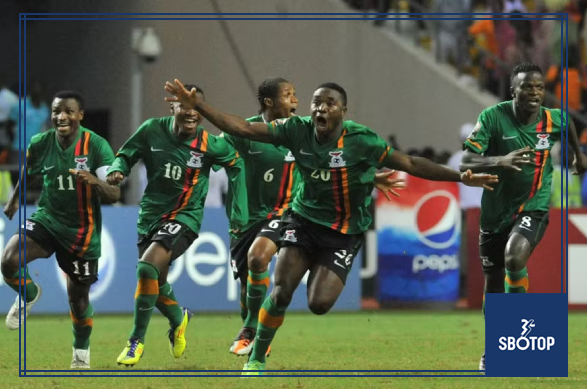
Zambia’s unforgettable run to the 2012 Africa Cup of Nations (AFCON) title stands as one of the most powerful and emotional stories the game of football has ever produced. It was not merely an underdog lifting silverware against all odds, but a triumph steeped in history, heartbreak, belief, and a sense of destiny that transcended sport.
When Chipolopolo defeated Ivory Coast on penalties after a tense 0-0 draw in the final in Libreville, the football world celebrated a fairytale ending. Yet the true magnitude of Zambia’s success can only be understood by looking back nearly two decades earlier, to one of the darkest moments in African football history.
A Tragedy That Shaped a Nation
In April 1993, the Zambia national team was en route to Senegal for a 1994 World Cup qualifier. The Air Force aircraft carrying most of the squad stopped in Libreville, Gabon, for refuelling. Shortly after takeoff, the plane crashed into the sea, killing all 25 people on board. Eighteen members of the national team perished, wiping out a generation of Zambian football talent and plunging the nation into deep mourning.
That squad had been one of the most promising in Africa, featuring players who had famously thrashed Italy 4-0 at the 1988 Seoul Olympics. Only a handful of Europe-based players, including talisman Kalusha Bwalya, were spared because they traveled separately. The tragedy left scars that went far beyond football.
Remarkably, Zambia rebuilt quickly. They narrowly missed qualification for the 1994 World Cup and reached the AFCON final that same year, only to lose 2-1 to Nigeria after leading at halftime. Despite the resilience, the pain of 1993 never faded.
Outsiders With Unshakeable Belief
Fast forward to 2012, and Zambia arrived at the AFCON finals in Gabon as rank outsiders. Coached by Hervé Renard, the squad lacked star power and global recognition. Yet, according to goalkeeper Kennedy Mweene, belief had already been growing within the group for years.
Speaking in an exclusive interview, Mweene explained that the foundations of the triumph were laid after the 2010 AFCON in Angola, where Zambia exited in the quarter-finals on penalties.
“We told ourselves we couldn’t come that far and then keep falling short,” Mweene said. “Most of the squad stayed together, and we started holding each other accountable. Training became intense, honest, and competitive.”
That togetherness became Zambia’s greatest weapon. Many players were based in Africa, knew each other well, and shared a collective hunger to prove themselves.
Hervé Renard’s Perfect Balance
Renard’s influence proved decisive. The French coach struck a rare balance between discipline and trust, demanding total commitment while treating his players like adults.
“He was strict when it came to work, but he listened,” Mweene recalled. “If you dropped your level, he would challenge you directly. That made players feel valued.”
Renard also knew how to remove pressure. Before the opening group match against Senegal, he reminded his players that no one expected Zambia to win. The result was a stunning 2-1 victory that instantly changed the tournament’s narrative.
“That win made everyone believe,” Mweene said. “From that moment, we felt anything was possible.”
A Team That Refused to Break
Zambia followed that win with a dramatic 2-2 draw against Libya on a waterlogged pitch, twice coming from behind. They then silenced 44,000 home fans by beating co-hosts Equatorial Guinea 1-0, topping their group with authority.
In the knockout stages, Zambia grew stronger. A convincing 3-0 quarter-final win over Sudan showcased their confidence and discipline. However, the semi-final against Ghana was the true test.
Mweene saved a penalty from Asamoah Gyan, and Emmanuel Mayuka scored the decisive goal in a tense 1-0 victory.
“That semi-final was harder than the final,” Mweene admitted. “Ghana had better individuals, but we had the stronger unit.”
Destiny Fulfilled in Libreville
The final against Ivory Coast was tight, physical, and goalless. In the penalty shootout, Zambia showed remarkable composure. Mweene even stepped up to score, before misses from Kolo Touré and Gervinho sealed a historic 8-7 victory.
What made the moment truly extraordinary was the location. The final was played just a few hundred metres from where the plane carrying Zambia’s fallen heroes had crashed 19 years earlier.
Before the tournament, the players had visited the nearby beach to pay their respects.
“That team from 1993 was better than us in terms of talent,” Mweene admitted. “But we were chosen to finish the story. We were blessed to close that chapter for them.”
A Legacy Beyond Football
Zambia’s 2012 AFCON triumph was more than a sporting achievement. It was a symbol of healing, resilience, and hope. Against all odds, in the shadow of tragedy, Chipolopolo delivered one of the most emotional victories football has ever witnessed.
As Zambia prepare for future AFCON campaigns, the memory of 2012 remains a powerful reminder: sometimes, football is not just about winning games—it is about honoring the past and inspiring a nation.
ALSO READ :