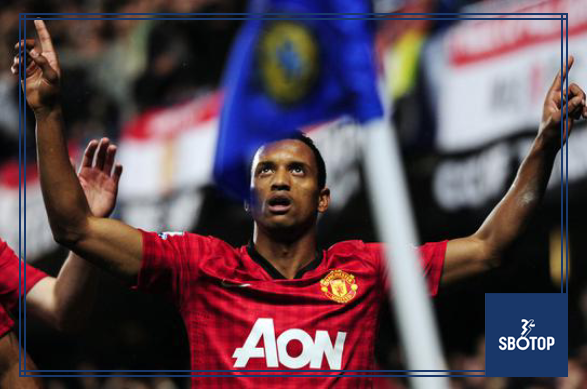
Manchester United’s golden era under Sir Alex Ferguson is often remembered for its relentless standards and uncompromising discipline. The legendary Scottish manager built his success not only on tactical excellence but also on a fearsome reputation in the dressing room. Yet, according to Wayne Rooney, one Manchester United star was a notable exception to Ferguson’s famously fiery approach: Nani.
Rooney’s revelation has brought renewed attention to Ferguson’s management style and highlighted how the most successful managers understand that different players require different treatment. While Ferguson was renowned for his explosive halftime speeches, Rooney insists that the former United boss deliberately chose a softer approach when dealing with the Portuguese winger.
Sir Alex Ferguson and the Famous “Hairdryer Treatment”
Sir Alex Ferguson’s leadership style became legendary throughout his 27-year reign at Old Trafford. His intense verbal confrontations with players—delivered at close range and with maximum volume—earned the nickname the “hairdryer treatment.”
Many Manchester United greats have admitted experiencing Ferguson’s wrath. Paul Scholes, David Beckham, and Roy Keane were among the high-profile players who faced harsh criticism when their performances dipped. For Ferguson, public or private confrontation was a tool designed to maintain discipline, intensity, and accountability.
The results speak for themselves. Between 1986 and 2013, Ferguson led Manchester United to 13 Premier League titles, two Champions League trophies, and numerous domestic honors. His uncompromising standards turned United into the dominant force in English football for more than two decades.
However, as Rooney later explained, that same approach was not applied universally.
Rooney Explains Ferguson’s Different Approach
In an interview conducted in 2018, Wayne Rooney provided insight into Ferguson’s psychological understanding of his squad. According to the former England captain, Ferguson intentionally targeted certain players—including Rooney himself—with aggressive criticism to provoke a response.
“Many times at half-time, I would be playing well while others weren’t,” Rooney recalled. “But he would come straight to me. He knew there would be an argument, and he knew that would get a reaction from me.”
Rooney believed Ferguson saw confrontation as a motivational trigger for players with strong personalities. The manager understood which individuals could absorb pressure and turn it into improved performance.
However, Rooney was quick to point out that Ferguson adopted a very different method with others, particularly Nani.
“If he did that to someone like Nani, he knew he would lose the player,” Rooney explained. “He understood how to handle different personalities.”
Why Nani Was Treated Differently
Nani joined Manchester United in 2007 after being signed from Sporting CP, arriving as one of Europe’s most exciting young wingers. Over eight seasons at Old Trafford, he made 230 appearances in all competitions and played a key role in one of the club’s most successful periods.
The Portuguese international won four Premier League titles and was part of the squad that lifted the Champions League trophy in 2008. His pace, dribbling ability, and creativity made him a constant threat on the flanks.
Yet, despite his talent, Nani was often perceived as a sensitive player who relied heavily on confidence. According to Rooney, Ferguson recognized this early and adjusted his management style accordingly.
Rather than shouting or publicly criticizing Nani, Ferguson chose encouragement and protection—an approach designed to bring out the winger’s best qualities without damaging his confidence.
Nani’s Style and the Premier League Challenge
Nani’s playing style was built on flair and technical skill rather than physical dominance. His ability to beat defenders in one-on-one situations made him a dangerous attacking weapon, but the physical intensity of the Premier League sometimes posed challenges.
While capable of spectacular performances, Nani could also struggle when matches became overly aggressive. Ferguson’s decision to shield him from harsh criticism was therefore a calculated move, aimed at preserving his attacking instincts rather than suppressing them.
This approach allowed Nani to express himself on the pitch, contributing crucial goals and assists during Manchester United’s most successful seasons.
A Moment That Highlighted Nani’s Sensitivity
Rooney once shared an incident that further illustrated Nani’s emotional side. He claimed to have seen Nani in tears after a heavy challenge from Jamie Carragher during a fiercely contested match at Anfield against Liverpool.
That moment, according to Rooney, revealed how deeply Nani felt the physical and psychological pressures of top-level football. It also reinforced why Ferguson believed a softer approach was necessary to keep the winger performing at his best.
Rather than viewing this as a weakness, Ferguson treated it as a personality trait that required careful management.
Ferguson’s True Strength as a Manager
Rooney’s story sheds new light on Ferguson’s legacy. While often portrayed as a disciplinarian who ruled through fear, Ferguson was, in reality, a master of man-management.
His ability to adapt his leadership style to different players was one of his greatest strengths. He knew when to apply pressure and when to offer support, ensuring that each individual contributed effectively to the team’s success.
Nani’s case serves as a powerful example of this philosophy. Ferguson’s decision not to shout at him was not favoritism, but a strategic choice rooted in psychological insight.
A Leadership Lesson That Still Resonates
The revelation from Rooney underscores why Sir Alex Ferguson remains one of the greatest managers in football history. His success was not solely built on discipline and authority, but on understanding human nature.
Behind the famous “hairdryer treatment” was a more nuanced leadership approach—one that recognized that winning teams are built not just on tactics, but on trust, empathy, and the ability to bring out the best in every player.
In Nani’s story, that philosophy is clearer than ever.
ALSO READ :