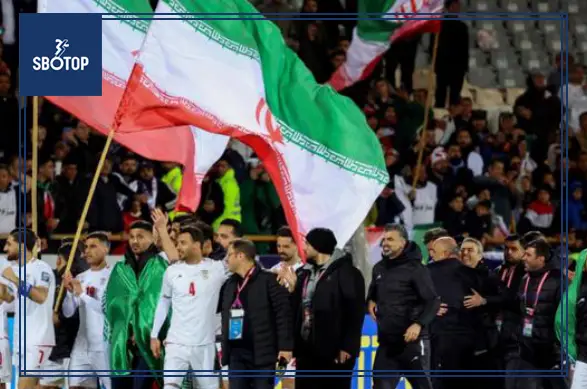
In the days leading up to the 2026 FIFA World Cup draw, an unexpected twist has emerged within the Iran national team camp. After the Iranian Football Federation publicly declared its intent to boycott the ceremony over visa complications, new developments reveal that head coach Amir Ghalenoei will, in fact, travel to Washington, D.C., to participate in the official draw.
The situation has sparked considerable attention in Iran, especially given the sensitive political backdrop. Diplomatic strains between Iran and the United States had initially cast doubt on whether Iran would have any presence at one of the tournament’s most crucial events.
Visa Issues Trigger Boycott Threat
The controversy began last week when the Iranian Football Federation announced that the United States had denied visas to several members of its delegation. As a result, Iran initially stated that it would not attend the draw, scheduled for Friday local time.
The federation argued that the inability to send the full delegation constituted a disruption of their preparation process. The announcement drew criticism from Iranian fans and media, who feared that a boycott could negatively affect Iran’s standing in FIFA’s administrative processes.
However, behind the scenes, FIFA continued to negotiate with participating nations, emphasizing that each team could send a limited number of representatives, particularly technical staff or the head coach, to ensure that no team was unrepresented.
Iran Confirms a Change of Plans
In a statement to the Iranian outlet YJC.ir, which is affiliated with national television, federation spokesperson Amir-Mahdi Alavi confirmed that Coach Amir Ghalenoei would attend the ceremony in person. He is expected to be accompanied by one or two technical staff members, ensuring that Iran still has an official presence at the draw.
Alavi clarified that sending Ghalenoei does not mean Iran is retracting its earlier protest regarding the denied visas. Instead, he framed the decision as a pragmatic move meant to protect Iran’s technical interests:
“Coach Ghalenoei’s attendance does not reflect a withdrawal of our objection,” Alavi said. “This decision is made purely for technical reasons. Iran cannot afford to miss a key moment such as the draw.”
U.S. Travel Restrictions at the Center of the Issue
The visa complications stem from the U.S. government’s travel restrictions announced by President Donald Trump earlier this year, which affect citizens of 12 countries—including Iran and Haiti, both of whom have qualified for the 2026 World Cup.
While the restrictions initially appeared to block Iranian officials entirely, the U.S. State Department later confirmed that exemptions could be granted for athletes, coaches, and key personnel associated with major international sporting events such as the World Cup or the Olympic Games.
This exception ultimately allowed Ghalenoei and a small part of his staff to apply for and receive clearance.
A Symbolic Appearance Amid Political Tension
Given the longstanding diplomatic tensions between Washington and Tehran, Iran’s participation in the draw carries symbolic weight. For many observers, Ghalenoei’s presence at the ceremony represents Iran’s commitment to separating football matters from political disputes—at least within the framework permitted by FIFA.
The World Cup draw is not merely a ceremonial gathering; it shapes each team’s path toward football’s biggest stage. Missing the event could have raised logistical and administrative concerns for Iran’s national team.
Iran Aims to Avoid Setbacks in Their 2026 World Cup Mission
By ensuring that the head coach is present, Iran safeguards its ability to receive technical briefings, scheduling details, and other important updates firsthand. This presence is crucial as Iran prepares to compete in what will be the first 48-team World Cup, jointly hosted by the United States, Canada, and Mexico.
Even though diplomatic friction is expected to continue between the two nations, Iran’s attendance reinforces its commitment to FIFA’s sporting protocols and ensures that it is treated equally alongside other participants.
Conclusion: Football Takes Priority—Despite the Politics
The Iranian Football Federation may have voiced frustration over visa denials, but ultimately, the country decided that its national team’s interests come first. With Coach Amir Ghalenoei attending the draw, Iran avoids an embarrassing absence from a major FIFA event and maintains its competitive preparation for the 2026 World Cup.
Despite the ongoing political strain, the decision highlights one essential truth: at the global stage of football, technical readiness outweighs diplomatic conflict.
For Iranian supporters, Ghalenoei’s attendance is seen as a necessary move to ensure that Iran’s journey toward the World Cup remains uninterrupted—both on the field and behind the scenes.
ALSO READ :