Ruben Amorim has once again found himself at the center of attention following a series of public remarks about his Manchester United squad that have sparked widespread debate. Known for his candid and uncompromising communication style, the Portuguese coach has repeatedly voiced concerns about his team’s performances, the club’s internal standards, and even his own role in the ongoing struggles at Old Trafford.
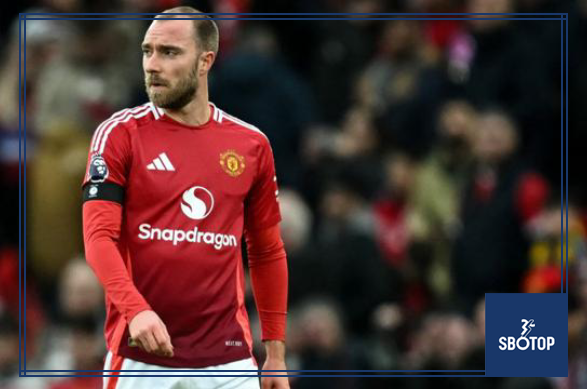
While Amorim’s approach is widely viewed as an attempt to provoke a reaction and demand higher accountability, critics argue that his public honesty has instead intensified pressure on an already fragile squad. The situation has now drawn a strong response from a former United player, with Christian Eriksen emerging as one of the most vocal figures questioning the effectiveness of Amorim’s messaging.
Amorim’s Unfiltered Assessment of Manchester United
Since taking charge of Manchester United, Amorim has never shied away from uncomfortable truths. Over his 13-month tenure, he has openly criticized player performances, questioned the club’s culture, and highlighted what he believes to be a mentality gap between United and Europe’s elite teams.
These comments intensified as United endured a difficult run in the Premier League. A sequence of poor results saw the club slip into mid-table, with United briefly languishing in 13th place after suffering four home defeats in five league matches. The downturn marked one of the most challenging periods in the club’s modern history and placed Amorim under mounting scrutiny.
Frustration boiled over during a post-match press conference when Amorim delivered a stark assessment that immediately dominated headlines. He suggested that the current side could be among the weakest Manchester United teams ever assembled — a statement that shocked supporters and pundits alike.
“In the last ten Premier League games, we have only won twice,” Amorim said, as quoted by Goal. “Imagine what that means for a Manchester United supporter. Imagine what it means for me. We brought in a new coach, and he has lost more matches than the previous one.”
Amorim doubled down on his remarks, insisting that blunt honesty was necessary to spark change. “I am fully aware of it. We might be the worst Manchester United team in history. I know you want headlines, but I am saying this because we have to recognize it and change it. This is it — here’s your headline.”
Intended Motivation or Added Pressure?
Amorim’s comments were interpreted by some as an attempt to challenge his players publicly and demand a higher level of responsibility. By including himself in the criticism, the coach appeared to acknowledge his own shortcomings while reinforcing the urgency for improvement.
However, many observers questioned whether such statements were appropriate given the unstable state of the squad. Rather than serving as motivation, the remarks risked deepening uncertainty and eroding confidence among players already struggling with form and expectations.
Public criticism of this magnitude is uncommon at a club of United’s stature, where internal matters have traditionally been addressed behind closed doors. Amorim’s departure from that norm has fueled debate about whether transparency and confrontation can coexist with player morale at elite level.
Christian Eriksen Voices Strong Disagreement
The strongest criticism came from Christian Eriksen, who offered a candid assessment of Amorim’s communication approach. Speaking as a former Manchester United player with experience at the highest level, Eriksen suggested that Amorim’s public comments did little to help the squad.
“That doesn’t help. No, it doesn’t help at all,” Eriksen said when asked about Amorim’s remarks. “I don’t think it helps the players in any way.”
Eriksen emphasized the importance of discretion, particularly during difficult periods. According to the Danish midfielder, there is a clear distinction between what should be addressed internally and what should be aired publicly.
“Some things you can say inside the dressing room,” he explained, “but it’s not wise to say them outside — especially when it adds more pressure and puts extra labels on players who are already trying to do their best.”
He added that repeated public criticism can create fatigue and distraction. “Whether he’s right or wrong is up to him, but for us it felt like, ‘Here we go again — another headline.’ And that’s not helpful.”
A Leadership Style at a Crossroads
The exchange highlights a broader question surrounding Amorim’s leadership philosophy. His directness has earned praise for honesty and accountability, yet it also risks alienating players who may feel exposed in the public eye.
At a club as globally scrutinized as Manchester United, every word carries weight. With results still inconsistent and confidence fragile, the balance between transparency and protection has become increasingly delicate.
As United look to stabilize their season and climb back toward European contention, Amorim faces a critical test — not only tactically, but in how he communicates with and about his squad. Whether his approach ultimately inspires a turnaround or deepens the divide remains one of the defining storylines of his tenure at Old Trafford.
ALSO READ :