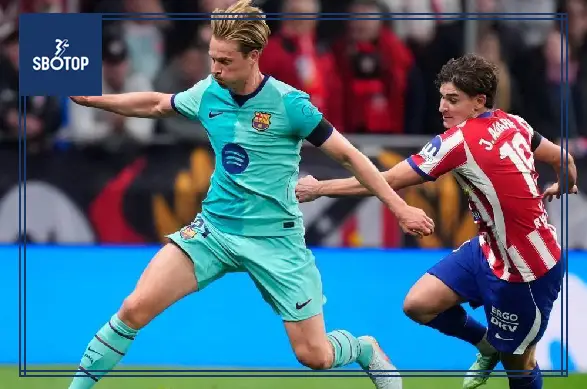
In a recent La Liga clash, Barcelona emerged victorious against Atletico Madrid with a score of 2-1, thanks in part to coach Hansi Flick’s tactical ingenuity. One of the most impactful decisions Flick made was to position Frenkie de Jong as a right-back during the second half. This unconventional move was surprising, particularly because De Jong is primarily known as a midfielder renowned for his playmaking abilities. However, this shift not only alleviated pressure from Atletico but also restored balance to Barcelona’s gameplay.
Barcelona’s Struggles in the First Half
Atletico Madrid displayed aggressive tactics during the first half, leveraging high pressing and effective ball possession. Players like Pablo Barrios and Koke effectively restricted the movement of Marc Bernal and Pedri, while Alex Baena and Giuliano Simeone exploited vulnerabilities in Barcelona’s defense. The early challenges for Barcelona were compounded by their inability to execute pressing strategies effectively. As a result, Atletico freely advanced through the midfield, creating several dangerous opportunities.
Flick acknowledged his team’s shortcomings in maintaining the proper distances between players to execute effective pressure. Nonetheless, he found satisfaction in the players’ response following the halftime break. “In the first half, our positioning was too distant from the opponents, making effective pressing impossible. However, a match lasts 90 minutes; while the first half was not our most polished, the second half was executed flawlessly,” said Flick.
Barcelona celebrated their rejuvenated performance after the match, which saw them flip the momentum in their favor with a goal from Fermin Lopez just before halftime.
Frenkie de Jong’s Impact and Tactical Flexibility
Upon being shifted to the right-back position, De Jong brought calmness while in possession, greatly aiding Barcelona in breaking through Atletico’s midfield pressure. His presence not only solidified the right flank defensively but also provided additional passing options that allowed Barcelona to better control the game’s tempo. De Jong’s role transcended that of a conventional right-back; he frequently moved into central areas to initiate attacks.
Working in tandem with Lamine Yamal and Fermin Lopez, De Jong helped orchestrate more threatening attacking avenues to dismantle Atletico’s defense. This positional change made Barcelona’s play more organized, particularly after they struggled in the first half.
Flick’s decisive actions underscored the importance of tactical flexibility in high-stakes matches. De Jong’s adaptability illustrated that his exceptional skill set and understanding of the game could serve as a solution for Barcelona, even when operating outside of his traditional midfield role.
The match showcased Flick’s astuteness in reading the dynamics of the game, enabling Barcelona to adapt and ultimately secure the win against a formidable opponent. As La Liga continues, it will be intriguing to monitor how Flick utilizes De Jong’s versatility going forward.
ALSO READ :